Warning: Cannot modify header information - headers already sent by (output started at /home/unfinis1/public_html/wp-content/mu-plugins/custom_file_4_1763281772.php:1) in /home/unfinis1/public_html/wp-includes/feed-rss2.php on line 8
Open to Financing – Unfinished Agenda Africa https://unfinishedagendaafrica.org Protecting wildlife and environment Thu, 01 May 2025 10:41:18 +0000 en-US hourly 1 https://wordpress.org/?v=6.9.4 https://unfinishedagendaafrica.org/wp-content/uploads/2025/05/unfinished-africa-150x150.png Open to Financing – Unfinished Agenda Africa https://unfinishedagendaafrica.org 32 32 Promoting Community based conservation of Osyris lanceolata (African Sandalwood) in … https://unfinishedagendaafrica.org/projects/promoting-community-based-conservation-of-osyris-lanceolata-african-sandalwood-in-baringo-kenya/ https://unfinishedagendaafrica.org/projects/promoting-community-based-conservation-of-osyris-lanceolata-african-sandalwood-in-baringo-kenya/#respond Thu, 01 May 2025 10:41:18 +0000 https://unfinishedagendaafrica.org/?post_type=service&p=4778 Photo credit: The Sandalwood East African group

The East African sandalwood tree (Osyris lanceolata) is an evergreen shrub species in the Santalaceae family (Orwa,2009). East Africa’s endangered sandalwood tree is being illegally harvested at a rate that could see it becoming extinct. Sandalwood smugglers target the trees for their roots, which contain the highest concentration of valuable oil. Poachers do not merely prune branches or harvest bark; they uproot entire trees, decimating populations at their source. This ruthless extraction method exacerbates the problem, as replanting and regeneration become increasingly difficult. Baringo a region with the highest concentration of sandalwood in Kenya, is now experiencing severe depletion. Despite government efforts to protect this precious resource, sandalwood faces an existential threat, with dire consequences for country’s biodiversity and ecological health. In 2013, CITES declared it a species facing extinction if trade was not controlled. The misuse of this valuable resource is causing a loss of biodiversity and a source of medicine for local communities. The overharvest of sandalwood species has led to many species now being vulnerable, in decline or extinct (Subasinghe, 2013). It does not occur communally in large numbers, which could be attributed to its slow growth and host preference. They mainly grow on unprotected lands, highlighting the importance of community involvement for a sustainable management of the species. It is from this background that the Unfinished Agenda Africa intends to promote the conservation of this species by promoting agroforestry for sandalwood and educating communities about sustainable harvesting and propagation techniques. Additionally, we will address the root causes of illegal logging and trade through awareness campaigns and strengthening community capacity to protect the species. These initiatives include encouraging communities to plant sandalwood saplings in their fields as part of agroforestry systems and promoting coppicing of existing sandalwood plants to facilitate regeneration.

]]>
https://unfinishedagendaafrica.org/projects/promoting-community-based-conservation-of-osyris-lanceolata-african-sandalwood-in-baringo-kenya/feed/ 0
Biodiversity conservation of Kapkatet swamp in, Kericho County https://unfinishedagendaafrica.org/projects/biodiversity-conservation-of-kapkatet-swamp-in-kericho-county/ https://unfinishedagendaafrica.org/projects/biodiversity-conservation-of-kapkatet-swamp-in-kericho-county/#respond Thu, 01 May 2025 10:39:48 +0000 https://unfinishedagendaafrica.org/?post_type=service&p=4775 Kapkatet wetland is a community-based wetland which is located in the South Rift region in Kenya. The Wetland is a vital ecosystem in Kenya. This wetland is the habitat of the endangered grey crowned crane (Balearica regulorum) which nest and glean on varieties of food substrates available on the subsurface of this wetland. In addition, this swamp is rich in various macrophytes with predominant vegetation being Cyperusspp. and Polygonum spp and many other non-woody plants both emergent and submerged. However, this ecosystem has been undergoing rapid degradation arising from competing land uses. Demand for more food by the local population has necessitated the expansion of farming lands, thus contributing to the degradation of wetland vegetation. Surprisingly, most of the natural vegetation at the edges has extensively been replaced with exotic trees, paddocks, and a span of crop fields in other sections. The ability of eucalyptus trees to alter the vegetation structure and wetland hydrology has also contributed to the reduction of food resources for the Balearica regulorum in the area. The unfinished Agenda Africa intends to conserve and protect species in this swamp through replanting native vegetation which will help to restore the natural ecosystem and support local wildlife. In addition, we will implement strategies to protect existing wildlife populations and species at risk by controlling invasive species in collaboration with the local community.

]]>
https://unfinishedagendaafrica.org/projects/biodiversity-conservation-of-kapkatet-swamp-in-kericho-county/feed/ 0
Restoration of biodiversity in Lake Elementaita https://unfinishedagendaafrica.org/projects/restoration-of-biodiversity-in-lake-elementaita/ https://unfinishedagendaafrica.org/projects/restoration-of-biodiversity-in-lake-elementaita/#respond Thu, 01 May 2025 10:38:30 +0000 https://unfinishedagendaafrica.org/?post_type=service&p=4767 Lake Elementaita is a shallow alkaline lake lying on the Rift Valley floor in Kenya. It is fed by inflows from the rivers Mbaruk, Kariandusi, Kikopey,Chamuka and Mereroni. The key values provided by Lake Elementaita are globally significant biodiversity. It is globally recognized as an Important Bird Area due to the assemblage of various birds of conservation concern such as the threatened, range-restricted Grey-crested Helmet-shrike (Near threatened) which occurs in the surrounding woodland where it may be resident. Other birds in this area include Lesser Flamingo (Near threatened), Jackson’s Widowbird (Near threatened), African Crowned Eagle (Near threatened), Greater Spotted Eagle (Vulnerable), Martial Eagle (Vulnerable) and Whiteheaded Vulture (Vulnerable).It also sustains significant populations of over 100 species of Palearctic migratory birds by offering a vital wintering ground for them making this one of the greatest ornithological spectacles on earth. In addition, the lake supports one of the major breeding colonies of the Great White Pelicans in the world and forms part of the Great Rift Valley migratory flyway system for migratory birds. Lake Elementaita was designated an Important Bird Area in 1999 by Birdlife International and a Ramsar Site in 2005 by the Ramsar Convention Secretariat. It was named a World Heritage Site in 2011 by UNESCO World Heritage Centre. Numerous human activities within and around the lake threaten the unique and fragile balance of the lake causing a serious threat to biodiversity. The Unfinished Agenda Africa therefore proposes a project for the restoration of Lake Elementaita ecosystem. The proposed project area is highly prone to erosion due to steep gradients compounded by poor land use practices. Lake Elementaita is a shallow alkaline lake lying on the Rift Valley floor in Kenya. It is fed by inflows from the rivers Mbaruk, Kariandusi, Kikopey,Chamuka and Mereroni. The key values provided by Lake Elementaita are globally significant biodiversity. It is globally recognized as an Important Bird Area due to the assemblage of various birds of conservation concern such as the threatened, range-restricted Grey-crested Helmet-shrike (Near threatened) which occurs in the surrounding woodland where it may be resident. Other birds in this area include Lesser Flamingo (Near threatened), Jackson’s Widowbird (Near threatened), African Crowned Eagle (Near threatened), Greater Spotted Eagle (Vulnerable), Martial Eagle (Vulnerable) and Whiteheaded Vulture (Vulnerable).It also sustains significant populations of over 100 species of Palearctic migratory birds by offering a vital wintering ground for them making this one of the greatest ornithological spectacles on earth. In addition, the lake supports one of the major breeding colonies of the Great White Pelicans in the world and forms part of the Great Rift Valley migratory flyway system for migratory birds. Lake Elementaita was designated an Important Bird Area in 1999 by Birdlife International and a Ramsar Site in 2005 by the Ramsar Convention Secretariat. It was named a World Heritage Site in 2011 by UNESCO World Heritage Centre. Numerous human activities within and around the lake threaten the unique and fragile balance of the lake causing a serious threat to biodiversity. We therefore propose a project for the restoration of Lake Elementaita ecosystem. The proposed project area is highly prone to erosion due to steep gradients compounded by poor land use practices. Within this context, the key environmental problem to be addressed by the project is land degradation, water pollution and loss of biodiversity. The project objective is to restore forest ecosystem and reduce land degradation in Lake Elementaita catchment area for increased protection of Lake Elementaita’s water resources, biodiversity, and associated ecosystem services. The high-level theory of change of the proposed project is that if the local community is supported to implement landscape restoration, overall threats to the Lake Elementaita and its associated ecosystem services will be reduced. The project will give priority to forest land management and restoration interventions in the upper catchment area of the lake for enhanced water and biodiversity protection. The project will also support smallholder farmers through training and facilitation to adopt best farming practices that enhance soil and water conservation measures and restore the lake’s ecosystem.

]]>
https://unfinishedagendaafrica.org/projects/restoration-of-biodiversity-in-lake-elementaita/feed/ 0
Restoring Lost Glow worm in Kericho County https://unfinishedagendaafrica.org/projects/restoring-lost-glow-worm-in-kericho-county/ https://unfinishedagendaafrica.org/projects/restoring-lost-glow-worm-in-kericho-county/#respond Thu, 01 May 2025 10:36:07 +0000 https://unfinishedagendaafrica.org/?post_type=service&p=4766 Lampyris noctiluca, or glow worms, producing light are unique animal species in Kenya. Little information is available on the species present and their relative distribution in Kenya. The IUCN Red List of Threatened Species does not currently have a specific assessment for the Lampyris noctiluca in Africa, according to Animal Diversity Web. However, Anecdotal reports indicate that Lampyris noctiluca populations have declined in recent times in Kenya. Traditional areas where this species used to be abundant are reporting none or sporadic sighting of the species. One of the areas where Glowworms typically thrive is in cooler, wetter climates and damp environments like caves and rainforests. Kericho’s climate, while cooler and wetter than other parts of Kenya, is a suitable habitat for Glow worms. However, Kericho has reported a decline in glowworm populations in recent times. Suspected cause for their decline could be attributed to light pollution, climate change, and habitat degradation. There is a need therefore to conduct in-depth investigation of the declining levels of Glow worm population in Kericho, County and Kenya at large. It is from this background that the Unfinished Agenda Africa wish to carry out a research and fill gaps on this grey area. Once glow-worm distribution is established, species determination will be conducted to gain an understanding of glow-worm speciation within Kericho in order to protect potentially vulnerable populations. A small number of larvae will be collected from each site for species analysis. Species will be identified using four criteria; morphological differences, genetic divergence, reproductive isolation and geographical barriers.   Classic taxonomic techniques will be applied to determine morphologically distinct species and describe these species. Genetic analysis will be   used to determine species groupings and investigate the evolutionary history of the taxa. Mating trials will be conducted to determine physical barriers operating between species and populations. It is hoped that this research will shed light on understanding of Kenya’s biologically distinct species and the need for specific populations to have strategic management plans put in place for their future protection.

]]>
https://unfinishedagendaafrica.org/projects/restoring-lost-glow-worm-in-kericho-county/feed/ 0
Pancake Tortoise (Malacochersus tornieri) Conservation in Baringo County https://unfinishedagendaafrica.org/projects/pancake-tortoise-malacochersus-tornieri-conservation-in-baringo-county/ https://unfinishedagendaafrica.org/projects/pancake-tortoise-malacochersus-tornieri-conservation-in-baringo-county/#respond Thu, 01 May 2025 10:32:32 +0000 https://unfinishedagendaafrica.org/?post_type=service&p=4765 This project focuses on Pancake Tortoise (Malacochersus tornieri) conservation, encompassing habitat protection, community engagement and establishment of road signs to alert motorists and safeguard vulnerable Pancake Tortoise populations in Baringo County in Kenya. The goal of this Project is to increase populations of Pancake Tortoise species by improving levels of protection and changing local human behaviour patterns. The desired outcomes of this project will be to improve conservation status of Pancake Tortoise and enhance protection of habitats with increased awareness and support for conservation among the community. This project will address the key threats to Pancake Tortoise and emphasize activities that are consistent with their recovery plans. These threats include habitat destruction and fragmentation. The most significant anthropogenic threat to Pancake Tortoise is rock destruction, change of lands from natural to agricultural mainly involving grazing for livestock, farming, and burning for charcoal production. The focus of this project will be in the geographic areas with the greatest potential to benefit the targeted species, specifically in Mogotio and Baringo South sub-Counties. In these areas, poverty is widespread, natural resources are over-exploited and there is conflict between people and wildlife and many species are threatened Pancake Tortoise included. This project will involve local communities to protect the Pancake Tortoise nests, reduce habitat degradation and establish road warning signs for this species to thrive

]]>
https://unfinishedagendaafrica.org/projects/pancake-tortoise-malacochersus-tornieri-conservation-in-baringo-county/feed/ 0
Restoration of Lake Elementaita Wetland https://unfinishedagendaafrica.org/projects/restoration-of-lake-elementaita-wetland/ Thu, 07 Mar 2024 09:58:25 +0000 https://unfinishedagendaafrica.org/?post_type=service&p=2821 Lake Elementaita is a shallow alkaline lake lying on the Rift Valley floor in Kenya. It is fed by inflows from the rivers Mbaruk, Kariandusi, Kikopey,Chamuka and Mereroni. The key values provided by Lake Elementaita are globally significant biodiversity. It is globally recognized as an Important Bird Area due to the assemblage of various birds of conservation concern such as the threatened, range-restricted Grey-crested Helmet-shrike (Near threatened) which occurs in the surrounding woodland where it may be resident. Other birds in this area include Lesser Flamingo (Near threatened), Jackson’s Widowbird (Near threatened), African Crowned Eagle (Near threatened), Greater Spotted Eagle (Vulnerable), Martial Eagle (Vulnerable) and White-headed Vulture (Vulnerable).It also sustains significant populations of over 100 species of Palearctic migratory birds by offering a vital wintering ground for them making this one of the greatest ornithological spectacles on earth. In addition, the lake supports one of the major breeding colonies of the Great White Pelicans in the world and forms part of the Great Rift Valley migratory flyway system for migratory birds. Lake Elementaita was designated an Important Bird Area in 1999 by Birdlife International and a Ramsar Site in 2005 by the Ramsar Convention Secretariat. It was named a World Heritage Site in 2011 by Unesco World Heritage Centre.

Numerous human activities within and around the lake threaten the unique and fragile balance of the lake causing a serious threat to biodiversity. These anthropogenic activities include clearing of natural vegetation for charcoal and firewood, urbanization and intensive river water abstraction for farming and commercial mining of salt for livestock. Domestic waste from mushrooming hotels and lodges around the lake is also adding to the pollution of this important wetland. Poor agricultural practices by small scale farmers in the upper catchment, most of which is by subsistence farmers is also a major threat to the lake. Unsustainable farming practices have led to siltation of streams and rivers in the headwaters and the lake. Furthermore, the eastern shores of the lake have been settled by a rapidly increasing population of subsistence farmers. Urbanization and infrastructure development and other types of development causing land use change are also a major threat to the lake. For instance, the ongoing construction of a big city along Mbaruk River which feeds the lake is likely to have adverse effects on the water supply to the lake. The Construction of this city without adequate mitigation measures, threatens the biophysical environment.

The Unfinished Agenda Africa therefore proposes a project for the restoration of Lake Elementaita ecosystem. The proposed project area is highly prone to erosion due to steep gradients compounded by poor land use practices and therefore is a key area for reducing land degradation. Within this context, the key environmental problem to be addressed by the project is land degradation, water pollution and loss of biodiversity. The project objective is to restore forest ecosystem and reduce land degradation in Lake Elementaita catchment area for increased protection of Lake Elementaita’s water resources, biodiversity, and associated ecosystem services. The high-level theory of change of the proposed project is that if the local community is supported to implement landscape restoration, overall threats to the Lake Elementaita and its associated ecosystem services will be reduced. The project will give priority to forest land management and restoration interventions in the upper catchment area of the lake for enhanced water and biodiversity protection. The project will also support smallholder farmers through training and facilitation to adopt best farming practices that enhance soil and water conservation measures and restore the lake’s ecosystem.

Project Budget

USD 50000

Want to support this project?

 Want to support this project?

$
Personal Info

Billing Details

To make a wire transfer donation toward this cause, here are the details:

BANK A/C 1320214053

BRANCH CODE:01103

BRANCH NAME:NAKURU BRANCH

SWIFT/BIC CODE: KCBLKENX017


Donation Total: $100.00

.To more details on the project contact us.


]]>
Enhancing Food Security For people Living with Disabilities in Nakuru City https://unfinishedagendaafrica.org/projects/enhancing-food-security-for-people-living-with-disabilities-in-nakuru-city/ Thu, 07 Mar 2024 09:44:29 +0000 https://unfinishedagendaafrica.org/?post_type=service&p=2815

Goal

The Project Development Objective (PDO) is improved Food security and nutrition as a consequence of increased food production by the target beneficiaries.

Specific Objectives:

  • Enhanced household food security  and nutrition
  • Increased awareness on sustainable farming practices
  • Improved savings by the beneficiaries through reduced purchase of vegetables induced by self-production
  • Enhanced resilience of beneficiaries  to climate change

Project summary

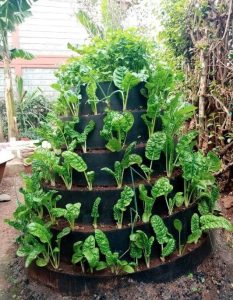
The Project beneficiaries will be people living with disabilities (PLWDs) residing in urban slums of Nakuru County. The project targets 50 beneficiaries and all of them will be drawn from people living with disabilities of mixed gender. Many families living with disabilities lack food supply at the household level and they struggle to meet their nutritional needs, due to their conditions. The gardens are designed in a way that they withstand rainy season and need little water in dry season. The vegetables are chosen to meet exactly the nutritional needs of the beneficiaries. The beneficiaries will receive specific assistance from the project which will include materials for making a complete multi-storey garden made of 6 layers and supported technical backstopping. These materials will include an already assembled polythene sheeting for the garden and organic manure.  The initiative will empower beneficiaries through capacity building and boosting of savings made through production of own food and potential income from sales of produce. The Unfinished Agenda Africa will conduct active beneficiary identification, sensitization and capacity building on the importance of urban farming, available innovative techniques applicable in their own spaces and demonstrations on how it’s practically done. This type of farming is considered land sparing because it enables large quantities of food to be produced in a variety of small spaces. Therefore it is appropriate for this setting

Project Budget

EURO 7000

Want to support this project?

$
Personal Info

Billing Details

To make a wire transfer donation toward this cause, here are the details:

BANK A/C 1320214053

BRANCH CODE:01103

BRANCH NAME:NAKURU BRANCH

SWIFT/BIC CODE: KCBLKENX017


Donation Total: $100.00

.To more details on the project contact us.


]]>